Drone Thermal Camera Inspections for Solar Farms
Collin County Drone LLC – Texas Solar SpecialistsDetect hidden problems before they cost you thousands.
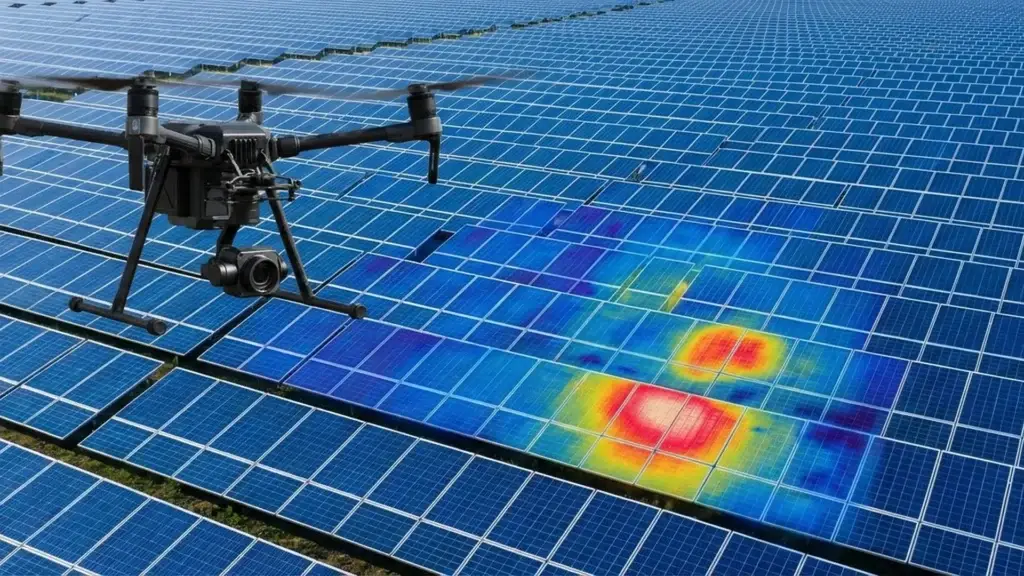
Drone thermal imaging (using high-resolution FLIR cameras) scans your entire solar array from the air in minutes — spotting hotspots, faulty cells, cracked panels, diode failures, soiling, shading, and delamination that regular visual inspections completely miss.Why Leading Texas Solar Operators Choose Drone Thermal InspectionsHere are all the real-world benefits that make drone thermal inspections the smartest choice for any solar farm (5 MW to 200+ MW):
1. 90% Faster Than Traditional Methods
A single drone flight covers 50–100 MW per day.
What used to take weeks of crews walking the site now takes just a few hours.
Result: You get full-farm data the same day instead of waiting days or weeks.
2. Massive Cost Savings
Reduce Operations & Maintenance (O&M) expenses by 30–45%.
Typical annual savings: $1,200 – $2,100 per MW.
Early detection recovers 2–5% of lost energy production that would otherwise go unnoticed.
3. Zero Safety Risk
No climbing on panels.
No walking through live electrical arrays in Texas heat.
No exposure to electrical hazards or fall risks.
100% remote — your team stays safely on the ground.
4. Cell-Level Precision (1–2°C Sensitivity)
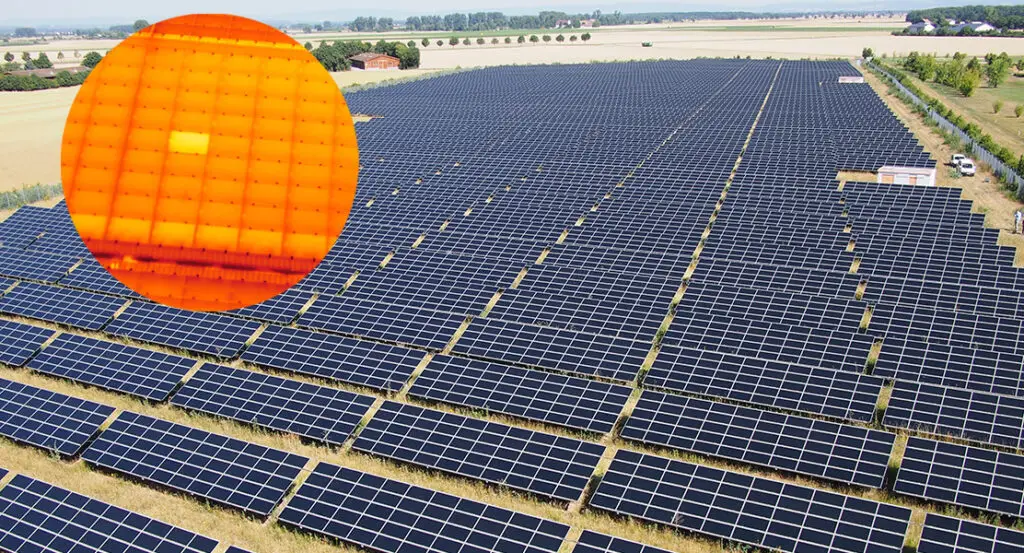
- Thermal cameras see temperature differences invisible to the naked eye.
Catches:- Hotspots from cracked cells or failed diodes
- Delamination and internal damage
- Soiling and bird droppings buildup
- Shading from vegetation or debris
- Underperforming strings before they drag down the entire array
5. Professional, Actionable Reports Delivered Same Day
- You receive:
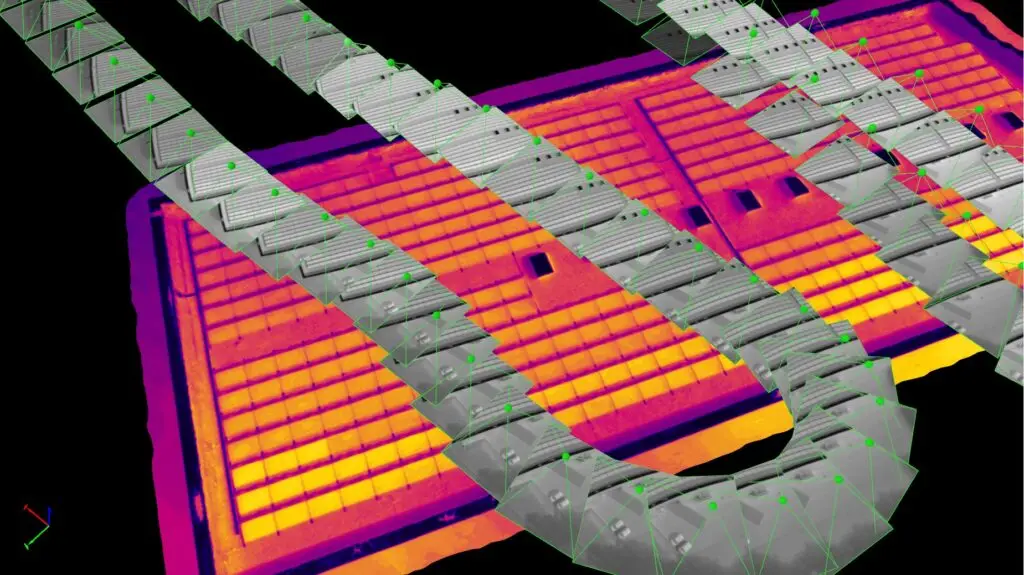
- GPS-tagged thermal + RGB orthomosaic maps
- AI-powered fault heatmaps
- Clear color-coded reports showing exact location and severity of every issue
- Exportable data for your SCADA system or maintenance team
6. Maximize Energy Output & Prevent Cascading Failures
A single faulty panel can reduce output across an entire string.
Catching problems early prevents expensive downtime and stops minor issues from becoming major failures.
Farms typically see a 2–5% increase in annual energy production after implementing drone-guided repairs.
How Drone Thermal Inspection Works (Simple 3-Step Process)
- Our FAA-certified pilots fly a pre-programmed grid pattern over your array at optimal height.
- The drone simultaneously captures high-res RGB photos + radiometric thermal data.
- Our software stitches everything into an interactive map and generates your report — usually within hours.
Real Results from Texas Solar Farms
- 150 MW West Texas farm: Found 187 faulty modules in one flight → 3.8% production increase after replacement.
- 45 MW DFW-area site: Identified severe soiling on 12 strings → cleaned and gained back 4.2% output.
- Multiple clients report payback on the inspection cost in under 30 days through recovered energy alone.
Frequently Asked Questions
How often should we inspect?
Most farms do a full thermal scan 1–2 times per year + after major storms.
Can you inspect while the system is operating?
Yes — we inspect live arrays during peak sun hours for the most accurate thermal data.
Do you provide repair recommendations?
We provide the data so you can determine what needs to be repaired or replace
Are you local to North Texas?
Yes — based in Collin County. We serve Texas from Dallas-Fort Worth to West Texas.
Ready to boost your solar farm performance?